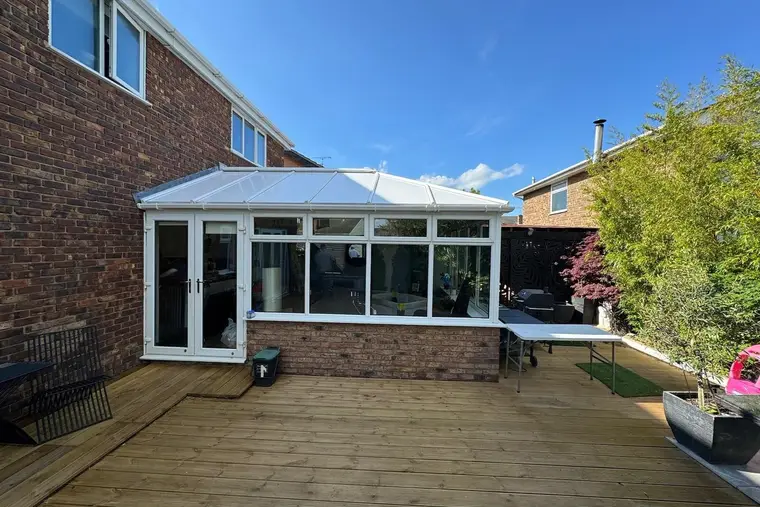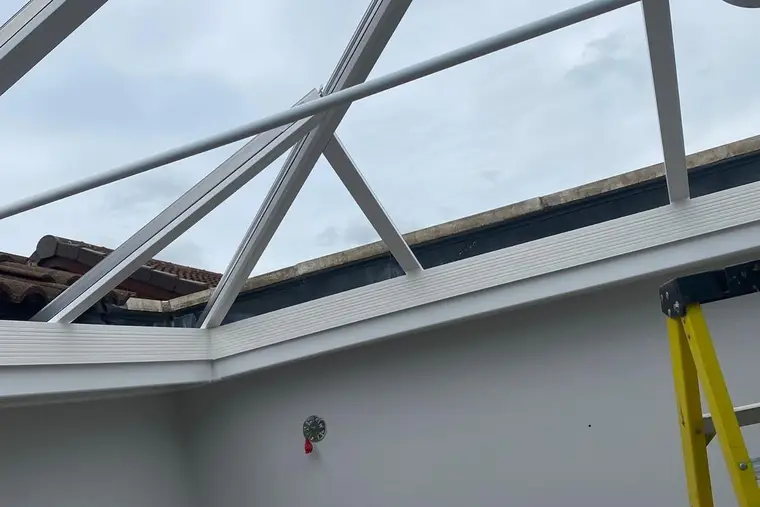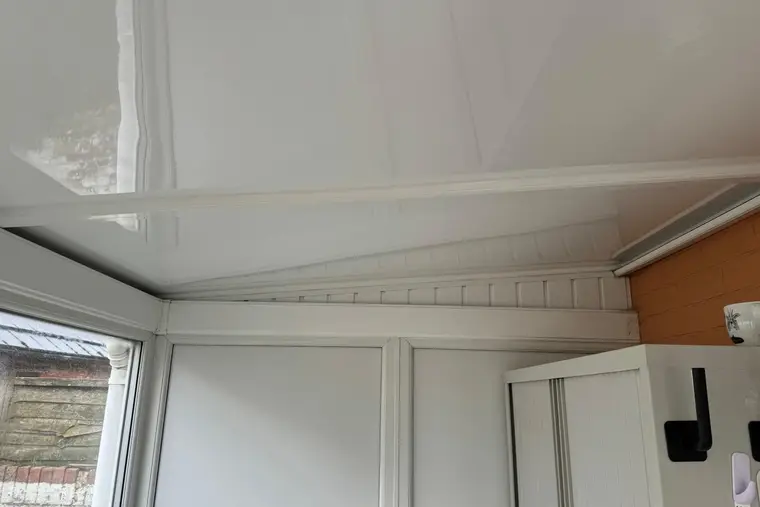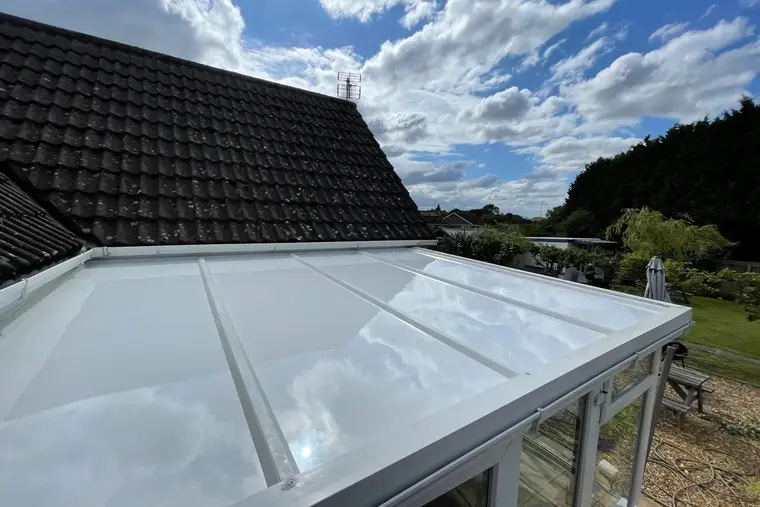
It looks like the perfect office. A room at the back of the house, away from the kitchen, with a view of the garden and a door you can close. Then June arrives and the screen turns into a mirror by 2pm, and in January you are typing in fingerless gloves. The room is not the problem. The roof is. Fix that, and a conservatory can be one of the best places in the house to work.
What stops a conservatory working as an office
Glare and heat in summer
Light through a clear roof arrives from straight above, which is exactly where you do not want it when you are looking at a screen. On a sunny afternoon, a south facing roof can push the room past 30°C, and the laptop fan joins in.
Cold in winter
The roof is the largest and thinnest surface in most conservatories, and warm air collects right under it. Sitting still at a desk for hours makes that far more noticeable than passing through with a cup of tea.
Noise on calls
Heavy rain on a polycarbonate roof is loud enough to interrupt a video call. A panel with a 75 mm foam core between two aluminium skins takes most of the drumming out.
What a working day costs to heat
Take a 3.5 m by 4 m Edwardian conservatory with a 14 m² roof. Say it is 5°C outside and you keep the room at 20°C from 9 to 5. That is a 15 degree gap for 8 hours. Heat lost through the roof alone:
- Old glass, before 2002 (U 2.8): 2.8 x 14 x 15 = 588 W, or 4.7 kWh a day. About £1.24 at 26.32p per kWh.
- 16 mm polycarbonate (U 2.3): 483 W, or 3.9 kWh a day. About £1.02.
- Insulated panels (U 0.43): 90 W, or 0.72 kWh a day. About 19p.
Over a winter of 130 working days, roughly October to March, five days a week, the polycarbonate roof loses about £132 of heat and the panel roof about £25. That is around £107 a winter from the roof alone, on the October to December 2026 electricity cap. The glazed walls lose heat on top, whichever roof you have, so your whole heating bill will be higher than these figures. The comfort difference is bigger than the money: the inner face of a panel roof sits only a degree or so below the room, so you stop feeling a chill from above.
Office problems, old roof against new
| Problem | Glass or polycarbonate roof | Insulated panel roof |
|---|---|---|
| Screen glare from above | Bright sky directly overhead most of the day | Gone; light comes in through the side walls |
| Afternoon heat | Often too hot to work in by mid afternoon | Most of the sun's heat stopped at the roof |
| Morning chill | Room loses its heat overnight | Warms up faster and holds it longer |
| Rain on calls | Loud drumming | Much quieter |
| Daylight | Plenty, sometimes too much | Less from above; add a roof light if you want sky |
Honest trade-off: the room will be less bright at noon than it is now. For screen work that is usually a gain. If you like a patch of sky, a glazed roof light placed behind your chair rather than in front of it gives you daylight without glare.
Setting the room up
- Put the desk side-on to the main glazed wall. Facing the glass puts your face in shadow on calls; your back to it puts reflections on the screen.
- Plan sockets early. In England, adding a new circuit is notifiable electrical work under Part P of the building regulations. A registered electrician can certify it. Extending an existing circuit is often simpler.
- Add proper light. LED spotlights fitted into the new roof cost £345 and give even light for dark winter afternoons.
- Check the router signal. The old outside wall of the house sits between most routers and the conservatory. A mesh point or a wired connection saves dropped calls.
- Heat on a thermostat and timer. A heater set to come on at 8.30 and off at 5 costs far less than one left on all day. After the roof is changed, the room is treated as an extension for building control, which opens the question of a radiator from the house heating; raise it when we agree the specification.
- Think about fresh air. One person at a desk all day adds moisture. Our guide to conservatory ventilation gives a simple routine.
Does working from home change the rules?
Doing your own desk work in the room is not normally something planning permission covers, provided the house is still mainly a home and a steady stream of clients or staff is not coming through. The roof swap follows the usual rules: planning is normally not needed when the height and footprint are unchanged, and a solid roof brings the room under building control, which we apply for on your behalf. It is also worth checking your home insurance covers work equipment kept in the room.
What the roof costs for this office
The 14 m² Edwardian sits in our medium band, where Edwardian roofs run £4,200 to £4,950 fitted. That includes removing and recycling the old roof, your choice of RAL colour outside, the building control application and an insurance backed guarantee for 10 years. Add spotlights (£345) and one roof light behind the desk (£395) and the guide range is £4,940 to £5,690.
Fitting takes one to two days, so you lose a day or two at the desk, not a week. Panels take 3 to 5 weeks to make once the survey is done, so if you want the room ready for winter, book the survey by early autumn.
Plan your office roof
If your roof is glass, read about replacing a glass roof first. Then choose colour, lights and extras on the build your roof tool, or get my price for a figure based on your measurements.
Questions
Is a conservatory warm enough for a home office in winter?
With a glass or polycarbonate roof it is hard work to heat for a full day. With an insulated panel roof, a thermostat controlled heater keeps it comfortable at a fraction of the cost.
How do I stop glare on my screen in a conservatory?
The worst glare comes from the sky overhead. A solid roof removes it, and placing the desk side-on to the main glazed wall deals with the rest.
Do I need planning permission to use a conservatory as an office?
Not normally, if the house stays mainly a home and you do not have regular clients or staff visiting.
Can you fit lights in a conservatory roof for an office?
Yes. We can build LED spotlights into the panel roof when it goes on, for £345, which gives even light on dark afternoons.