Every conservatory needs air. Without it, moisture builds up, windows mist, and the room smells stale by February. With too much of the wrong kind, you pay to heat the garden. The trick is controlled ventilation: the right amount, at the right time, through the right opening. This matters even more once an old roof is replaced, because the roof stops being the biggest heat leak, and the air you let in takes over.
Why the room needs fresh air at all
Moisture comes from ordinary life. Each person sitting in the room breathes out roughly 40 g of water an hour. A single load of washing hung to dry releases around 2 litres. Plants, a dog shaking off after a walk, and a kettle boiled for a tray of tea all add more. That water stays in the air until it finds a cold surface to settle on or a way out.
A cheap hygrometer tells you how you are doing. Aim for a relative humidity of about 40% to 60%. If it sits above 70% for days at a time, the room needs more air or less moisture going in.
What changes when the old roof goes
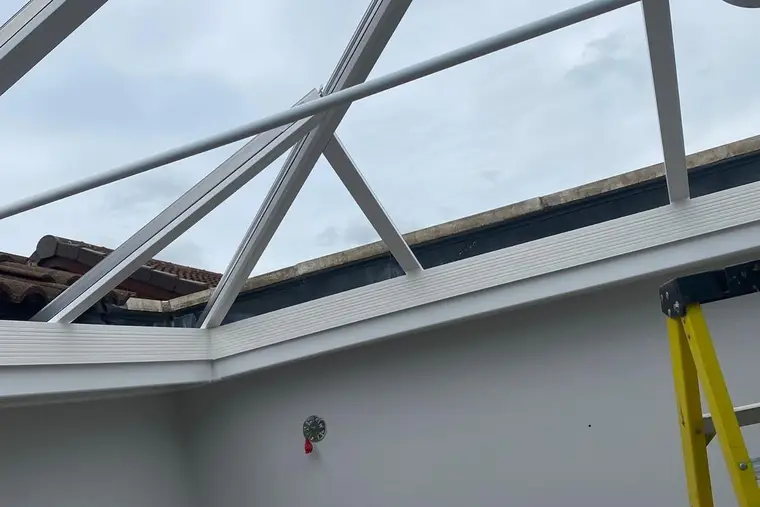
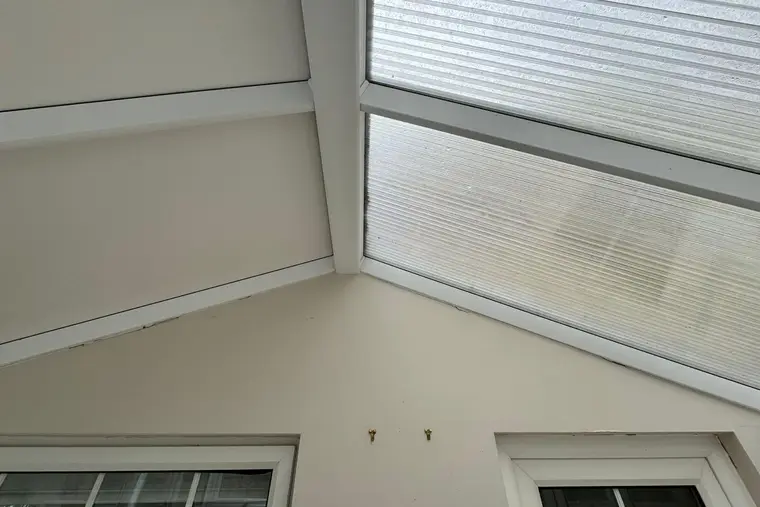
Many glass and polycarbonate roofs have ridge vents or opening roof vents. When we fit a solid panel roof, those go with the old roof. In practice most of them were rarely opened in winter, and many had stopped sealing properly, which is its own kind of ventilation, just not a helpful one.
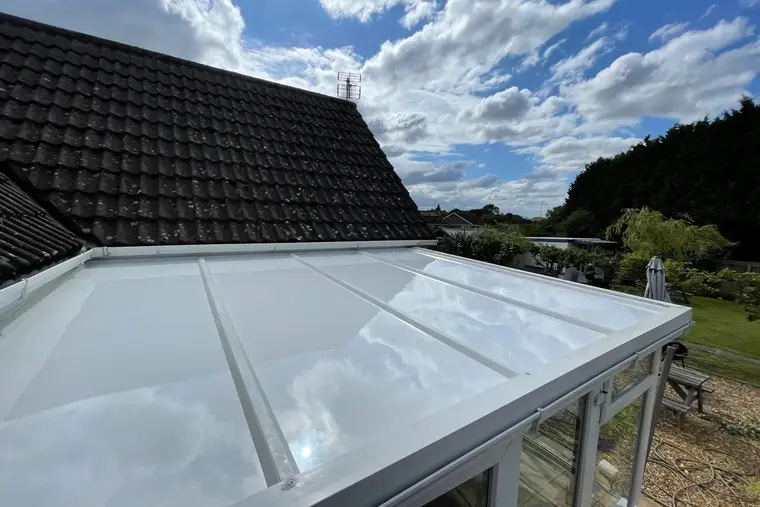
After the change, fresh air comes from the walls: windows, trickle vents and doors. Once the roof is solid, the room no longer counts as an exempt conservatory, so it is treated like an extension for building control purposes, and the officer may look at ventilation too. We raise it when we agree the specification, so you know before fitting whether anything needs adding.
How much opening is enough?
Approved Document F sets out purge ventilation, meaning the ability to air a room quickly. For windows that open to 30 degrees or more, the usual rule is openable area of at least a twentieth of the floor area. Windows that only open between 15 and 30 degrees need double that.
Counting the sashes on a lean-to
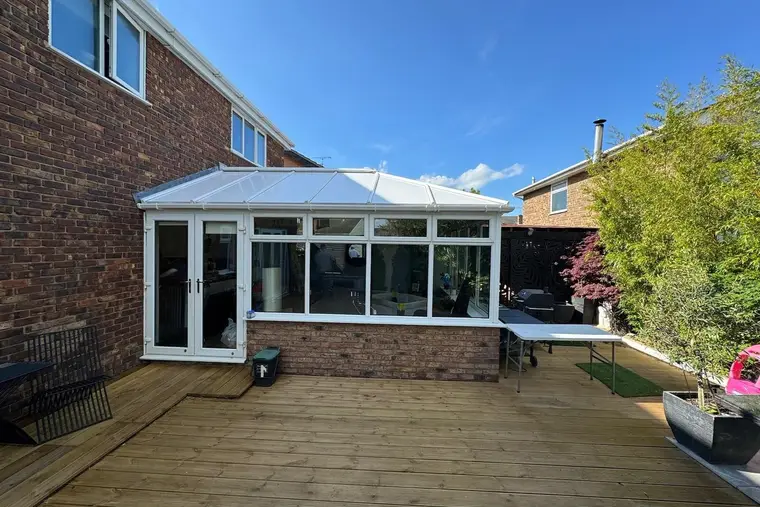
Take a 3.5 m by 3 m lean-to. The floor is 10.5 m², so it needs about 0.53 m² of opening. One top-hung sash of 0.6 m by 0.45 m gives 0.27 m². Two of them give 0.54 m², which just does it. Many conservatories already have three or four opening sashes, so this is rarely a problem, but it is worth counting yours before the survey.
The heat cost of fresh air
Warm air that leaves takes its heat with it. The sum is simple: about 0.33 W for every cubic metre of air changed per hour, per degree of difference between indoors and out.
Our 3.5 m by 3 m lean-to with an average ceiling height of 2.4 m holds about 25 m³ of air. On a 4°C day, heated to 20°C, one full air change an hour costs about 0.33 x 25 x 16 = 133 W.
Now compare that with the roof on the same day:
- 16 mm polycarbonate roof: 2.3 x 10.5 x 16 = about 386 W.
- Insulated panel roof: 0.43 x 10.5 x 16 = about 72 W.
With the old roof, ventilation is a side issue. With the new roof, one air change an hour loses almost twice as much heat as the whole roof. That is not a reason to seal the room up. It is a reason to air it on purpose rather than by accident.
Your options, side by side
| Source of fresh air | Good for | Watch out for |
|---|---|---|
| Trickle vents in the window heads | Steady background air all day, day and night | They get closed and forgotten; check they are open in winter |
| Top-hung opening sashes | Airing the room fast in 10 minutes | A sash left on the latch all day in January wastes heat |
| Garden doors | Summer evenings and big clear-outs | Security, and heat pouring out in winter |
| A single room heat recovery fan | Winter background air with much of the heat kept | Needs a hole through the wall, power and a proper install |
| The door to the house left open | Nothing much | Pulls warm house air into a cooler room, where it mists the glass |
A simple winter routine
- Keep trickle vents open unless there is a gale blowing straight at them.
- Air in bursts. Open two sashes wide for 10 minutes in the morning. The air swaps over fast, but the walls, floor and furniture barely cool, so the room recovers quickly.
- Close the door to the house while you air it.
- Dry washing somewhere else. If there is no other option, run a dehumidifier in the room with the windows shut.
- Air again after cooking or a busy afternoon with several people in the room.
Summer is a different job
In summer the aim flips from moisture to heat. A glass or polycarbonate roof lets in a lot of sun, and ventilation is the only way to get that heat out. An insulated panel roof blocks most of the heat at the source, so the room needs far less airing to stay comfortable. On a warm day, open one sash low on the shady side and one high on the sunny side, and let the moving air do the work. If the room is too hot as well as too cold, our guide to a conservatory that is too cold to use covers the winter side, and the pages on replacing polycarbonate and glass roofs explain the summer difference.
Using the room every day?
A room used as an office or a playroom has people in it for hours, so it collects more moisture and needs steady background air. Our guide to turning a conservatory into a home office goes through the set-up.
Talk it through at the survey
Tell us how you use the room and where the windows open, and we will cover ventilation when we agree the building control specification. The order of events is on our how we work page. For a figure for your roof, get my price.
Questions
Does a conservatory need ventilation in winter?
Yes. Background air through trickle vents and short bursts of airing keep moisture down, which stops misted windows and mould on frames.
Will I lose my roof vents with a panel roof?
Yes, any vents in the old roof are removed with it. Fresh air then comes through the windows, trickle vents and doors in the walls.
How long should I air a conservatory for?
About 10 minutes with two windows wide open swaps most of the air without chilling the walls and furniture.
What humidity should a conservatory be?
About 40% to 60% relative humidity. Readings above 70% for days on end mean the room needs more air or less moisture going in.