The survey is where a guide price becomes your price. Until someone has stood in your conservatory with a tape, a level and a torch, every figure is an estimate. This page explains what we do on the visit, what we need from you, and what you get afterwards, so there are no surprises on the day.
Ten minutes of preparation
You do not need to tidy for us. A few small jobs do make the visit quicker and the price more accurate.
- Clear a path outside. Unlock the side gate and move bins, pots and bikes away from the conservatory walls so we can reach every corner.
- Find any paperwork. The year the conservatory went up, any old approvals, and anything about the house's planning history.
- Photograph problems. If it drips in heavy rain, a photo taken at the time is worth more than a description.
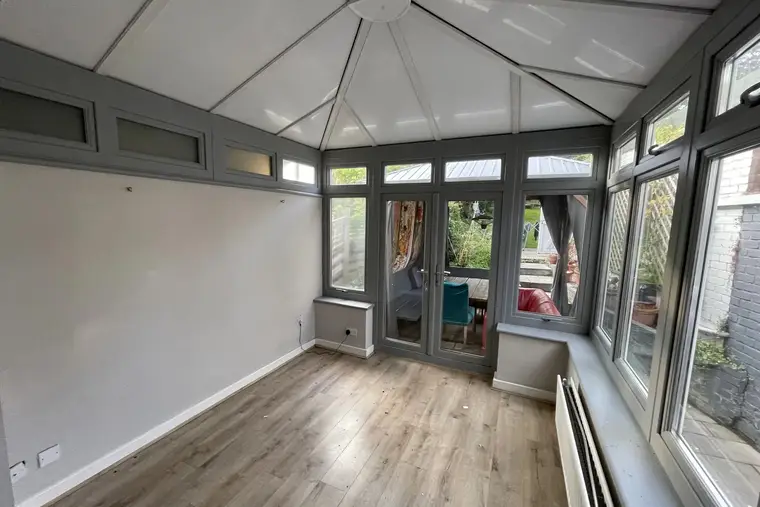
- Think about use. Office, dining room, playroom, somewhere to sit with a book? It changes what we suggest for lighting and daylight.
- Pick two or three colours. Browse the colour range first, and we will bring samples to hold against your frames.
- Shut pets away if they are likely to make a bid for the garden while the gate is open.
The visit, stage by stage
Put 60 to 90 minutes in the diary. Large or P-shaped roofs sit at the top of that.
| Stage | Roughly | What happens | Your part |
|---|---|---|---|
| A chat indoors | 10 minutes | How you use the room, how you heat it, what annoys you about it | Be blunt about the problems |
| Outside measuring | 20 to 30 minutes | Width, depth, heights, pitch, every roof bar and gutter | None, unless a gate is locked |
| Inside checks | 15 minutes | Frame, doors, base, damp, and where power could reach any spotlights | Show us any marks or leaks |
| Rules check | 5 minutes | Listed status, conservation area, planning history | Share any paperwork you found |
| Options at the table | 15 to 20 minutes | Colours, roof lights, spotlights, gutters, timings | Ask anything you like |
What we measure, and why it has to be right
Each panel is made for one specific bay of your roof. That means the numbers have to be right the first time, so we take more than you might expect.
- The width along the house wall and the depth out to the gutter.
- The height at the eaves and at the point where the roof meets the house.
- The pitch of every slope, and on a Victorian the angle of each facet.
- The number of roof bars and the gap between each pair.
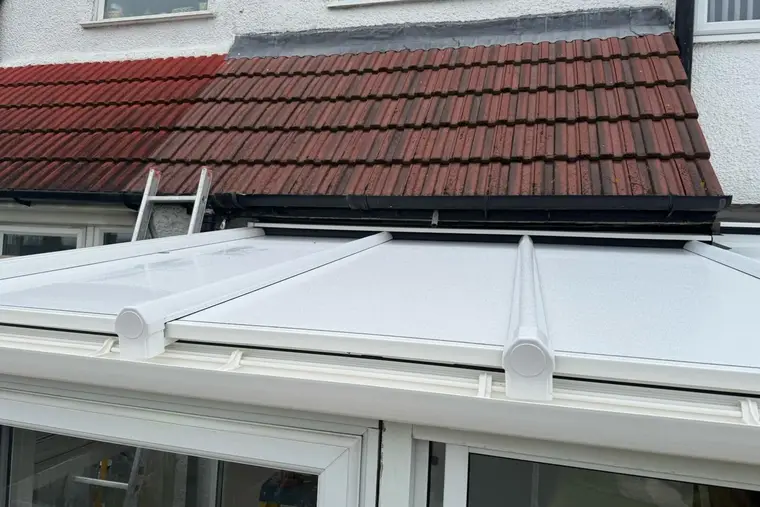
- The length and condition of every gutter run and the position of each outlet.
- Any downpipes from the house roof that feed onto the conservatory.
- Vents, cables, flues or aerials near the roof that could get in the way.
We photograph everything too. Those photos go to the factory with the measurements, and they also help when we describe the job to building control.
Checking the frame the roof will sit on
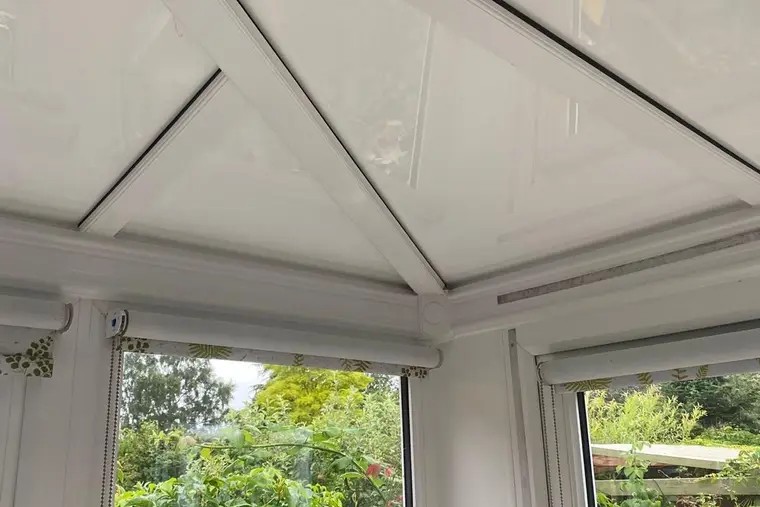
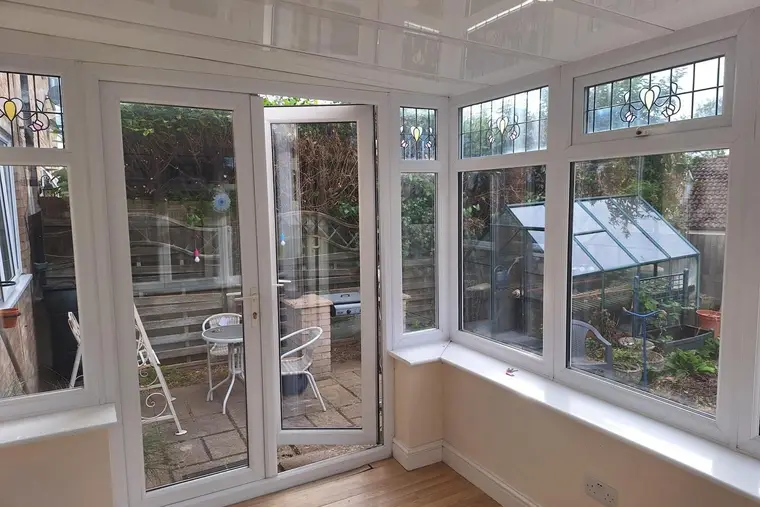
Our panels reuse your existing frame, so its condition matters. We look for anything that shows movement or water getting in: doors that catch, cracked brickwork in the dwarf wall, bowed beams, damp at floor level. Most uPVC and aluminium conservatories pass without any work. Where something needs fixing first, the written price says what and why. Where the base has moved badly, we say so plainly and do not quote for a roof that would only hide the problem.
The size band surprise: a worked example
Here is a common one. An owner in Swindon measures their Edwardian conservatory from inside and gets 3.5 m by 3.2 m, which is 11.2 m². That puts it in the small band, where the Edwardian guide range is £3,200 to £3,800.
From outside, over the frames and to the edge of the gutter, the tape reads 3.6 m by 3.5 m. That is 12.6 m², just over the 12 m² line, so the roof is medium, where Edwardian roofs run £4,200 to £4,950. A few centimetres of frame and gutter moved the band.
It works the other way too. A lean-to measured generously from the garden often comes back smaller once we measure from the house wall. That is why we fix the price after the survey rather than on a phone call. If you want to get close yourself first, our guide on how to measure a conservatory roof shows where to put the tape.
Good questions to ask us on the day
- Can I see the colour sample against my frames in daylight?
- Where exactly would a roof light go, and what would I see through it from my chair?
- Is my gutter worth keeping, or should it be changed while you are here?
- What will building control need from me, if anything?
- When is your next fitting slot after the application goes in?
After the visit
You receive a written price for your roof. It covers the panels fitted, taking away and recycling the old roof, your chosen RAL colour outside with white inside, the building control application, and an insurance backed guarantee lasting 10 years. Extras you asked for get their own lines: £395 per roof light, £345 for LED spotlights, £295 for new gutters and fascia.
For the Swindon owner, a medium Edwardian with one roof light and new gutters comes to a guide range of £4,890 to £5,640. Once you say yes, we settle the specification with building control and send in the application ourselves. Panels are made in 3 to 5 weeks, and a small roof is fitted in one day, a medium in one to two. The full sequence is on our how we work page.
Ready to book?
Start with a guide figure so the survey confirms a number you already expect. Look through the price guide, then get my price and pick a time that suits you.
Questions
How long does a conservatory roof survey take?
Allow 60 to 90 minutes. Small lean-tos are quicker; large and P-shaped roofs take the longest.
Does someone need to be in for the survey?
Yes. We need to see inside the conservatory and talk through how you use it, colours and extras.
Can the price change after the survey?
The guide price can move if the measured size falls in a different band or the frame needs a repair. Once you have the written price, that is the figure.
What if the survey finds my conservatory is not suitable?
We tell you in writing and explain why. We will not fit a new roof on a frame or base that has moved badly.